The Ultimate Guide to Pure Coconut Indonesia Shisha Charcoal
Introduction to Premium Shisha Experiences
In the vibrant and ever-evolving world of hookah and shisha culture, the quality of the charcoal used is just as critical as the flavor of the tobacco itself. For connoisseurs and commercial lounge operators alike, pure coconut Indonesia shisha charcoal has emerged as the undisputed gold standard. Renowned for its clean burn, high heat retention, and minimal ash production, this natural briquette elevates the smoking experience by ensuring that the authentic flavors of the shisha remain untainted by harsh chemicals or lingering odors.
Indonesia, an archipelago blessed with abundant tropical resources, is the epicenter of this industry. The country produces millions of tons of coconuts annually, making it the perfect hub for manufacturing sustainable, high-grade charcoal derived entirely from coconut shells. By transforming what would otherwise be agricultural waste into a premium combustible product, Indonesian manufacturers have revolutionized the global hookah market.
Why Indonesia Dominates the Coconut Charcoal Market
Indonesia's dominance in the coconut charcoal industry is no accident. It is the result of a perfect storm of geographical advantages, agricultural abundance, and refined manufacturing techniques. The islands of Sulawesi, Sumatra, and Java are particularly famous for their vast coconut plantations. The coconuts grown in these regions possess shells with exceptional density and thickness, which are critical attributes for producing long-lasting charcoal.
Furthermore, the Indonesian workforce has developed specialized expertise in the carbonization process. This deep-rooted knowledge ensures that the coconut shells are burned in oxygen-limited environments at precise temperatures, yielding raw charcoal with an exceptionally high carbon content. A higher carbon content directly translates to a hotter, longer-lasting burn, which is precisely what shisha enthusiasts demand.
The Manufacturing Process of Pure Coconut Charcoal
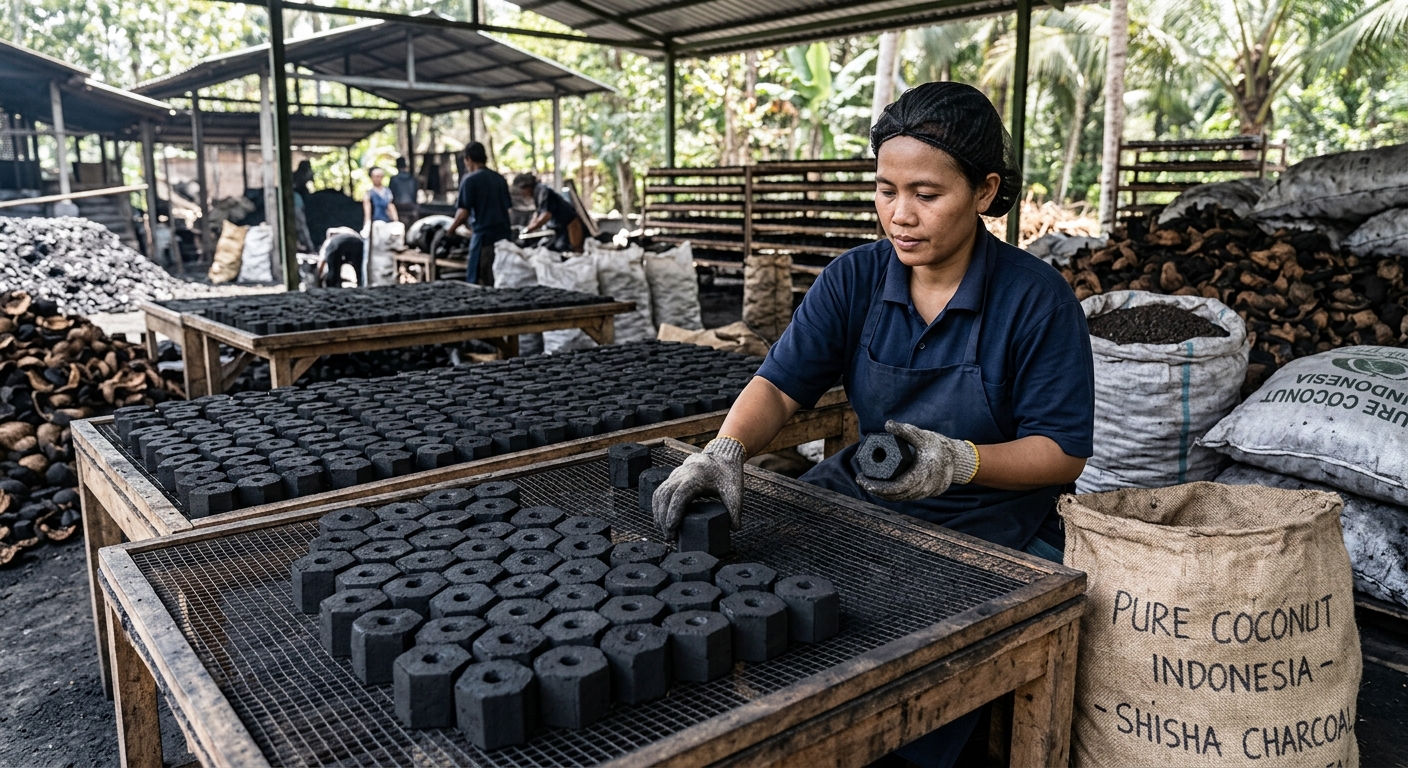
The journey from a raw coconut shell on a tropical tree to a perfectly cubed briquette on a shisha bowl is intricate and requires strict quality control. The process begins with the collection of mature coconut shells, which are meticulously cleaned and dried. These shells are then placed into large kilns for carbonization. During this phase, the shells are burned at temperatures exceeding 500 degrees Celsius in a controlled, low-oxygen environment. This removes moisture and volatile compounds, leaving behind high-carbon coconut shell charcoal.
Once carbonized, the charcoal is crushed into a fine powder. To bind this powder into the familiar cube or hexagonal shapes used for shisha, manufacturers use a completely natural binder, typically food-grade tapioca starch. The mixture is extruded through heavy machinery, cut to precise dimensions, and then baked in large industrial ovens to remove any remaining moisture. The result is a briquette that is 100% natural, incredibly dense, and free of any chemical accelerants.
Understanding the Benefits: A Comparative Look
To understand why enthusiasts and professionals prefer natural options over synthetic alternatives, consider the following comparison between pure coconut charcoal and traditional quick-light charcoal across key performance metrics.
| Charcoal Type | Average Burn Time | Ash Percentage | Chemical Additives |
|---|---|---|---|
| Pure Coconut Charcoal | 90 - 120 Minutes | Under 2.5% | None |
| Quick-Light Charcoal | 30 - 45 Minutes | 5.0% - 10.0% | Sulfur and Saltpeter |
As the table illustrates, pure coconut charcoal vastly outperforms quick-light varieties. While quick-light coals offer convenience, they burn out rapidly, produce excessive ash that can clog the shisha bowl, and release chemical fumes that alter the taste of the tobacco and pose potential health risks.
Packaging and Global Industry Standards
Creating a premium product is only half the battle; ensuring it reaches the end consumer in pristine condition is equally important. Pure coconut Indonesia shisha charcoal must be packaged meticulously to protect it from moisture and physical damage during international transit. Briquettes are typically sealed in thick plastic inner liners before being boxed in sturdy, branded cardboard. For producers and distributors looking to understand the intricacies of boxing and sealing these briquettes, reading A Comprehensive Guide to Charcoal Packing: Methods, Equipment, and Industry Standards is highly recommended.
Importing Pure Coconut Charcoal from Indonesia
The global demand for high-quality shisha charcoal has made importing from Indonesia a highly lucrative venture for wholesalers in the Middle East, Europe, and the Americas. However, importing combustible materials requires navigating a complex web of logistics, quality assurance checks, and international shipping regulations. Buyers must verify that their suppliers adhere to strict moisture content limits and hold the necessary certifications for safe maritime transport. For Arabic-speaking buyers interested in navigating the complexities of sourcing, checking out دليل استيراد الفحم من اندونيسيا: الخطوات، الأنواع، والنصائح provides valuable insights.
Conclusion
In conclusion, pure coconut Indonesia shisha charcoal represents the pinnacle of hookah heating solutions. Its sustainable origins, chemical-free composition, and unparalleled performance metrics make it an indispensable product for anyone serious about their shisha experience. By leveraging the natural density of Indonesian coconut shells and adhering to strict manufacturing and packaging standards, producers in Indonesia continue to supply the world with a product that burns hotter, lasts longer, and tastes cleaner.
Frequently Asked Questions
Why is coconut charcoal considered better for shisha?
Coconut charcoal is completely natural and contains no chemical accelerants like sulfur. This means it produces no unwanted odors or flavors, allowing you to taste only your shisha tobacco. Additionally, it burns much hotter and longer than wood or quick-light alternatives.
How long does pure Indonesian coconut charcoal burn?
High-quality Indonesian coconut charcoal typically burns for 90 to 120 minutes depending on the size of the briquette and the airflow in the room. This extended burn time means fewer coal changes during a shisha session.
Are trees cut down to make coconut charcoal?
No trees are cut down to produce coconut charcoal. It is made strictly from the shells of coconuts that have already been harvested for their meat and water. This makes it a highly sustainable and eco-friendly product that upcycles agricultural waste.