The Art and Science of Premium Shisha Charcoal Manufacture
Introduction to Premium Shisha Charcoal
The global hookah market has evolved significantly over the past decade, shifting from rudimentary setups to sophisticated, high-end experiences. Central to this elevated experience is the heat source. Premium shisha charcoal manufacture is a specialized industry that combines traditional carbonization techniques with modern engineering to produce briquettes that are odorless, tasteless, and exceptionally long-lasting. For hookah enthusiasts, the quality of the charcoal dictates the quality of the session. If you have ever asked yourself about the components of a perfect session, reading What Do You Smoke Out of a Hookah? A Comprehensive Guide will reveal that the purity of your heat source is just as critical as the premium tobacco you choose.
Selecting the Raw Materials
The foundation of any premium shisha charcoal is the raw material. Unlike traditional barbecue charcoal, which can be made from various hardwoods and scrap wood, premium hookah charcoal is predominantly manufactured from 100% natural coconut shells. Coconut shells are favored due to their incredible density, high carbon content, and minimal ash residue when burned. The sourcing process is meticulous; manufacturers must secure mature, dry coconut shells, typically harvested in tropical regions such as Indonesia, the Philippines, and Sri Lanka. Using substandard shells or mixing coconut with wood fillers drastically reduces the quality, leading to unwanted odors, high ash output, and shorter burn times.
The Manufacturing Process: From Shell to Briquette
The journey from a discarded coconut shell to a premium glowing cube is complex and requires strict quality control at every stage. The manufacturing process can be broken down into several critical steps:
1. Carbonization
The first step in premium shisha charcoal manufacture is carbonization. The raw coconut shells are cleaned and placed into large kilns where they are heated in an oxygen-deprived environment. This process, known as pyrolysis, burns off moisture, volatile organic compounds, and impurities, leaving behind highly concentrated carbon. The temperature and duration of carbonization must be tightly controlled; if the temperature is too low, the charcoal will produce excessive smoke; if too high, the yield decreases, and the carbon becomes too brittle.
2. Grinding and Crushing
Once the coconut shells are fully carbonized, they are crushed and ground into a fine powder. The granularity of the powder is a closely guarded secret among top manufacturers. A finer powder generally results in a denser, smoother briquette that burns more evenly. Industrial crushers and sieves are utilized to ensure absolute uniformity in the carbon dust.
3. Mixing with a Natural Binder
Because carbonized coconut powder cannot hold a shape on its own, it must be mixed with a binder. Premium manufacturers strictly avoid chemical adhesives, opting instead for natural, food-grade binders. The most common binder is a starch paste made from tapioca or cassava. The ratio of water, starch, and carbon dust must be precise. Too much binder will cause the charcoal to emit an unpleasant odor and produce excess ash, while too little will result in briquettes that crack and crumble under the intense heat of a hookah session.
4. Briquetting and Extrusion
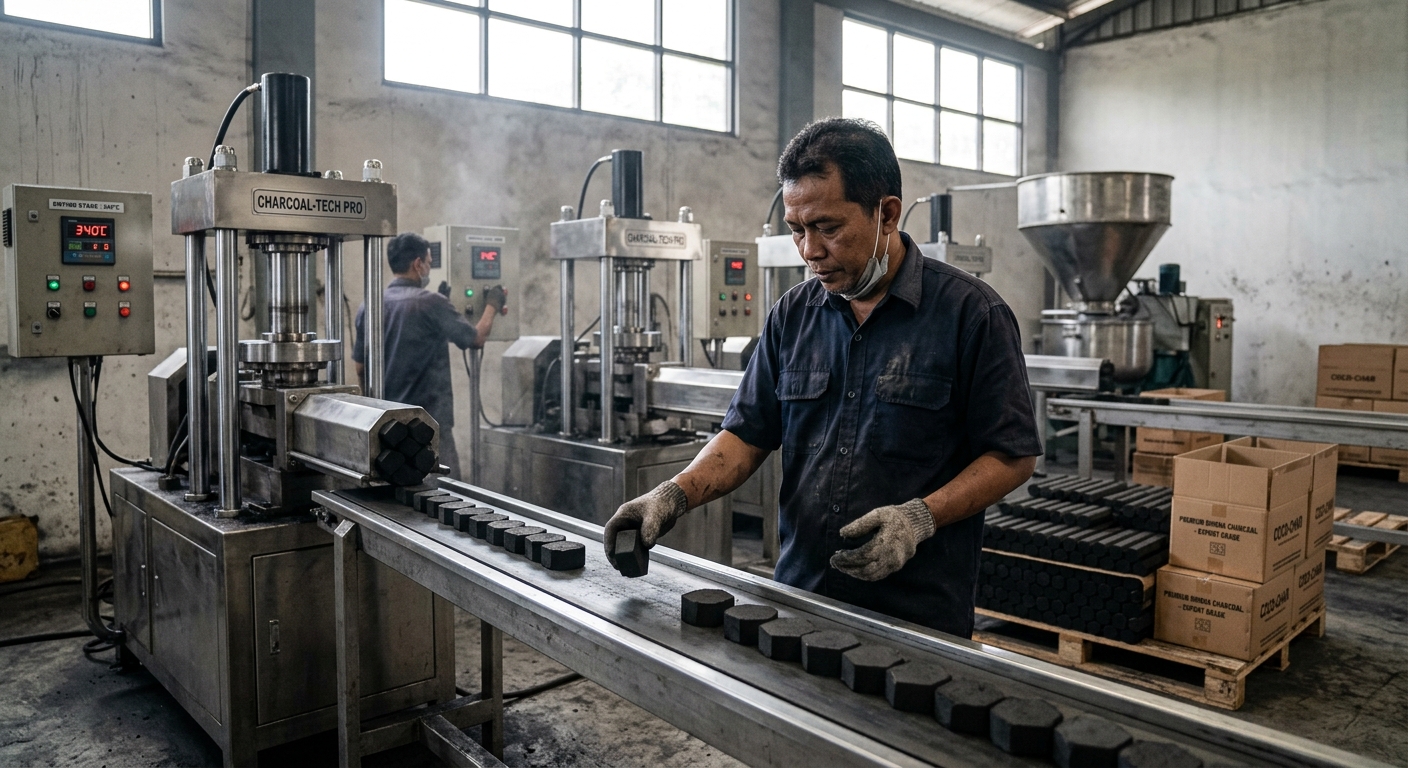
The damp carbon mixture is then fed into heavy-duty extrusion machines or briquette presses. The mixture is forced under immense pressure through molds, typically forming the standard 25mm or 26mm cubes, though flats and hexagonal shapes are also popular. High pressure is vital during this stage to maximize density, which directly correlates with the charcoal's burn time and heat output.
5. Drying and Curing
Freshly pressed briquettes contain a high moisture content and must be thoroughly dried before packaging. They are placed on large racks and rolled into industrial ovens. The drying process must be gradual to prevent the outside of the briquette from drying faster than the inside, which causes internal fracturing. Proper curing ensures the charcoal will light evenly and maintain its structural integrity when glowing red hot.
Quality Control and Industry Standards
Premium shisha charcoal manufacture demands rigorous quality assurance. Batches are regularly tested for fixed carbon percentage, moisture content, ash percentage, and volatile matter. A premium coconut charcoal will typically boast a fixed carbon content of over 80%, an ash content below 3%, and a moisture content of less than 5%. Additionally, drop tests are conducted to ensure the briquettes do not shatter during transit. Understanding the technical specifications is crucial for distributors. For a deep dive into the properties of high-quality hookah carbon, reviewing A Comprehensive Guide to Carbon Para Hookah: Everything You Need to Know provides an excellent breakdown of international standards and market expectations.
Comparing Charcoal Types
To fully appreciate the value of premium coconut shell manufacturing, it is helpful to compare it directly with the cheaper, chemically treated alternatives commonly found in the market. The following table highlights the critical differences between natural coconut charcoal and quick-light charcoal.
| Charcoal Type | Burn Time | Ash Content | Odor / Taste Output | Ignition Time |
|---|---|---|---|---|
| Premium Coconut Cube | 90 - 120 minutes | Less than 3% | Neutral (None) | 10 - 15 minutes |
| Standard Quick-Light | 30 - 45 minutes | 10% - 15% | Chemical / Sulphuric | 1 - 2 minutes |
| Hardwood Lump | 45 - 60 minutes | 5% - 8% | Woody / Smoky | 5 - 8 minutes |
Environmental Impact and Sustainability
One of the most significant advantages of premium shisha charcoal manufacture is its inherent sustainability. By utilizing coconut shells—an agricultural byproduct that would otherwise be discarded or burned as waste—the industry avoids contributing to deforestation. High-end manufacturers also invest in eco-friendly carbonization kilns that capture and recycle the smoke and heat produced during pyrolysis, further reducing the carbon footprint. As global consumers become more environmentally conscious, the demand for sustainable, non-timber forest products continues to drive innovation in the shisha industry.
Conclusion
Premium shisha charcoal manufacture is a sophisticated industrial process that requires precision, high-quality raw materials, and strict adherence to natural production methods. By transforming dense coconut shells into pure, high-carbon briquettes, manufacturers provide hookah enthusiasts with a clean, odorless, and long-lasting heat source that elevates the entire smoking experience. As the market continues to expand, the emphasis on sustainability and stringent quality control will ensure that premium coconut charcoal remains the gold standard for hookah sessions worldwide.
Frequently Asked Questions (FAQ)
What makes coconut shell charcoal better for hookah?
Coconut shell charcoal is incredibly dense and has a high carbon content. This allows it to burn much longer and hotter than wood-based charcoal while producing minimal ash and absolutely no chemical odors that could ruin the flavor of the shisha tobacco.
Why does my hookah charcoal crack when lighting?
Charcoal typically cracks due to excessive moisture trapped inside the briquette or due to poor manufacturing where insufficient pressure or incorrect binder ratios were used. Premium charcoal is dried thoroughly to prevent this internal fracturing.
Are there any chemicals used in premium shisha charcoal manufacture?
No. True premium shisha charcoal uses zero chemical accelerants or synthetic adhesives. The only ingredients are pure carbonized coconut shell dust, water, and a natural, food-grade starch binder (like tapioca) to hold the cube together.
How long does premium coconut charcoal take to light?
Because it lacks chemical accelerants like sulfur or gunpowder, premium coconut charcoal takes approximately 10 to 15 minutes to fully ignite on a dedicated electric coil burner. It must be glowing red on all sides before being placed on the hookah bowl.