Low Ash Shisha Charcoal Manufacture: A Comprehensive Guide
Introduction to Low Ash Shisha Charcoal
The global demand for high-quality shisha (hookah) charcoal has seen a significant surge in recent years. Enthusiasts and lounge owners alike are constantly seeking the perfect coal—one that burns long, emits no off-putting odors, and, most importantly, produces minimal ash. Understanding low ash shisha charcoal manufacture is crucial for both consumers who want the best smoking experience and entrepreneurs looking to source premium products. This article delves deep into the manufacturing process, quality control, and the sourcing of top-tier shisha charcoal.
The Importance of Low Ash Content
When smoking shisha, the charcoal acts as the heat source that vaporizes the flavored molasses. If a charcoal has a high ash content, the ash can fall into the bowl, contaminating the flavor and potentially clogging the airflow. Low ash charcoal, typically containing less than 2.5% ash, ensures a clean, consistent burn. It also means less maintenance during a smoking session, as there is no need to constantly tap the ash off the coals.
Raw Material Selection: The Foundation of Quality
The journey of manufacturing premium shisha charcoal begins with the selection of raw materials. The most preferred material for low ash charcoal is 100% natural coconut shells. Coconut shells are inherently dense and have a high carbon content, which translates to a longer burning time and minimal ash production.
- Sustainability: Utilizing coconut shells is an eco-friendly approach, as it repurposes agricultural waste without the need to cut down trees.
- Purity: High-quality coconut shells are free from chemical additives, ensuring a clean burn.
- Density: The natural density of the shells contributes to the structural integrity of the final briquette.
The Manufacturing Process
1. Carbonization
Once the coconut shells are collected, they undergo carbonization. This process involves heating the shells in an oxygen-deprived environment. The temperature must be carefully controlled, often reaching up to 800°C. Proper carbonization burns off impurities and volatile compounds, leaving behind pure carbon. If the carbonization is incomplete, the resulting charcoal will produce more smoke and ash.
2. Crushing and Grinding
The carbonized coconut shells are then crushed and ground into a fine powder. The finer the powder, the smoother and denser the final briquette will be. Manufacturers use specialized milling machines to achieve a uniform particle size, which is critical for reducing ash content and improving burn time.
3. Mixing with Binders
To form the charcoal powder into briquettes, a binder must be added. For high-quality, natural shisha charcoal, manufacturers use a food-grade starch binder, such as tapioca. The ratio of binder to charcoal powder is a closely guarded secret among top manufacturers, as too much binder can increase ash content and alter the taste, while too little will result in crumbly briquettes.
4. Pressing and Extrusion
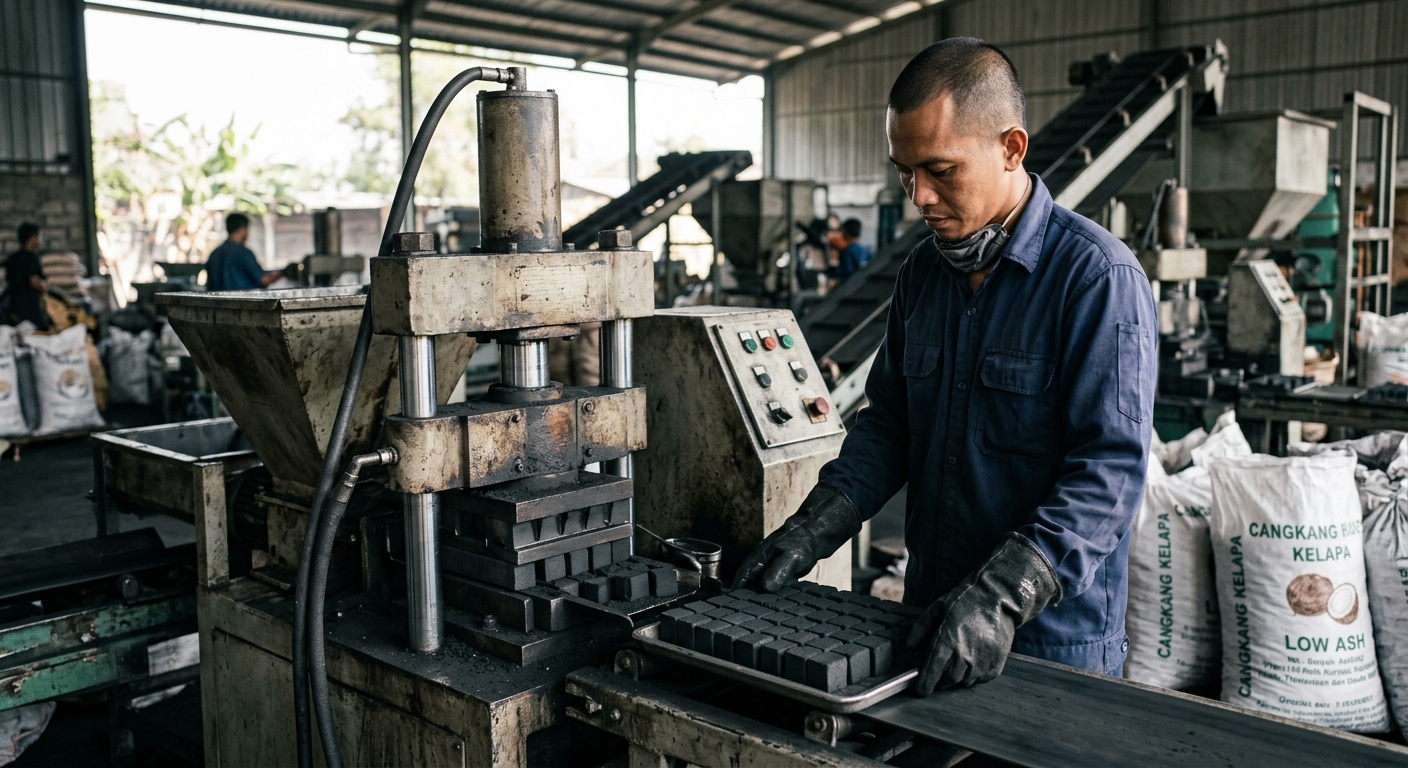
The mixture is then fed into heavy-duty presses or extruders. These machines apply immense pressure to form the mixture into specific shapes, most commonly cubes (e.g., 25mm or 22mm) or flats. High pressure ensures the briquettes are dense, which directly correlates to a longer burn time and lower ash production.
5. Drying
The newly formed briquettes contain moisture from the binder. They must be thoroughly dried in large, industrial ovens. The drying process must be gradual and uniform to prevent cracking. Once dried to a moisture content of less than 5%, the briquettes are ready for quality control and packaging.
Quality Control in Manufacture
To maintain a low ash profile, stringent quality control measures are implemented throughout the manufacturing process. Samples from each batch are tested for:
- Ash Content: Must remain below a specified threshold (usually 2-2.5%).
- Moisture Content: Ensures the charcoal ignites properly and doesn't crack.
- Volatile Matter: Low volatile matter guarantees no smoke or bad odor.
- Drop Test: Ensures the briquettes do not break easily during transport or handling.
Sourcing Wholesale Charcoal from Indonesia
Indonesia is globally recognized as the leading producer of premium coconut shell charcoal. The country's vast coconut plantations provide an abundant and sustainable source of raw materials. For businesses looking to purchase in bulk, finding a reliable supplier is paramount. If you are exploring this avenue, reading Your Guide to Finding the Best Wholesale Hookah Charcoal Supplier in Indonesia will provide invaluable insights into selecting a manufacturing partner that adheres to strict low ash standards.
Furthermore, importing these products involves navigating various regulations, logistics, and quality assurances. To ensure a smooth process from the factory floor to your warehouse, it is highly recommended to review How to Import Charcoal from Indonesia: A Comprehensive Guide. This resource covers everything from necessary documentation to shipping logistics.
Comparing Shisha Charcoal Types
| Charcoal Type | Raw Material | Ash Content | Burn Time | Odor/Taste Impact |
|---|---|---|---|---|
| Premium Low Ash | 100% Coconut Shell | < 2.5% | 90-120 mins | None (Neutral) |
| Standard Briquette | Mixed Wood/Coconut | 3% - 5% | 60-90 mins | Slight |
| Quick-Light | Wood dust with chemicals | > 5% | 30-45 mins | High (Chemical taste) |
Conclusion
The manufacture of low ash shisha charcoal is a meticulous process that requires high-quality raw materials, precise carbonization, and stringent quality control. By utilizing 100% natural coconut shells and natural binders, manufacturers can produce charcoal that elevates the shisha smoking experience, providing a long-lasting, clean, and odorless burn. For businesses, understanding this process and knowing how to source from reputable manufacturers in countries like Indonesia is the key to providing customers with a superior product.
Frequently Asked Questions (FAQ)
Why is coconut shell used for low ash shisha charcoal?
Coconut shells are naturally dense and have a high carbon content. When properly carbonized, they produce a very clean-burning charcoal that leaves behind minimal ash, usually less than 2.5%, and does not impart any unwanted flavors to the shisha.
How does the binder affect the ash content?
The binder is necessary to hold the charcoal powder together. Natural, food-grade binders like tapioca starch are used in premium manufacturing. If too much binder is used, or if synthetic binders are employed, it can significantly increase the ash content and alter the taste of the smoke.
Can I import low ash charcoal directly from manufacturers?
Yes, many businesses import directly from countries like Indonesia, which is the top producer of coconut charcoal. It requires finding a reliable wholesale supplier and understanding the export/import regulations, shipping logistics, and quality certifications necessary for your specific market.