A Comprehensive Guide to Charcoal Packing: Methods, Equipment, and Industry Standards
Introduction to Charcoal Packing
Charcoal packing is a critical stage in the supply chain of solid fuels. It ensures that the product reaches consumers in optimal condition, protected from moisture, crushing, and environmental degradation. Whether you are dealing with lump charcoal, briquettes, or specialized industrial carbon, the packaging process must be handled with precision. Proper packing not only preserves the energy value of the charcoal but also plays a vital role in marketing and logistics.
As global demand for both domestic and industrial charcoal continues to rise, suppliers are investing heavily in automated packing solutions and durable materials. For instance, understanding market dynamics such as سعر طن الفحم في إندونيسيا: دليل شامل للسوق والاتجاهات can provide valuable insights into production costs and how packing efficiency impacts the bottom line.
The Importance of Effective Charcoal Packaging
Effective packaging serves several critical functions. First and foremost, it acts as a barrier against moisture. Charcoal is highly porous and hydroscopic; if exposed to high humidity, it absorbs water, which severely diminishes its burning efficiency and can lead to difficulties in ignition. Secondly, durable packaging protects the brittle charcoal pieces from physical damage during transit. Crushed charcoal turns into unusable dust, leading to customer dissatisfaction and financial loss.
Furthermore, packaging is a key component of branding and consumer safety. High-quality bags printed with clear usage instructions, safety warnings, and brand logos help establish trust in the marketplace. Whether sourced locally or from a reputable Supplier Briquette Charcoal: A Comprehensive Guide to Sourcing Quality Fuel, the packing reflects the quality of the product inside.
Common Charcoal Packing Materials
The choice of packing material depends heavily on the target market, transportation methods, and the type of charcoal being packaged. The industry primarily relies on a few standard materials to balance cost, durability, and environmental impact.
Kraft Paper Bags
Multi-wall Kraft paper bags are the standard for retail barbecue charcoal. They are relatively inexpensive, customizable for branding, and environmentally friendly. Often, these bags feature an inner polyethylene liner or a specialized coating to prevent moisture penetration while allowing the charcoal to breathe slightly, preventing condensation.
Polypropylene (PP) Woven Bags
For bulk wholesale and industrial applications, woven polypropylene bags are the preferred choice. These sacks are incredibly strong, tear-resistant, and capable of holding large weights (typically 10kg to 50kg). While they do not offer the same high-end retail aesthetic as paper bags, their durability makes them essential for long-distance logistics and export markets.
Corrugated Cardboard Boxes
Specialty charcoals, such as high-grade shisha briquettes or activated carbon products, are often packed in corrugated cardboard boxes. Boxes provide superior structural protection against crushing and are easily palletized for efficient shipping. They also offer a premium unboxing experience and excellent surfaces for high-resolution printing.
The following table compares the most common charcoal packing materials based on their primary use, durability, and moisture protection levels.
| Material Type | Primary Application | Durability Level | Moisture Protection |
|---|---|---|---|
| Multi-wall Kraft Paper | Retail BBQ Charcoal | Moderate | Medium (with liner) |
| Woven Polypropylene | Bulk / Industrial Charcoal | High | Low to Medium |
| Corrugated Cardboard | Premium / Shisha Briquettes | Very High | High (with inner wrap) |
The Charcoal Packing Process
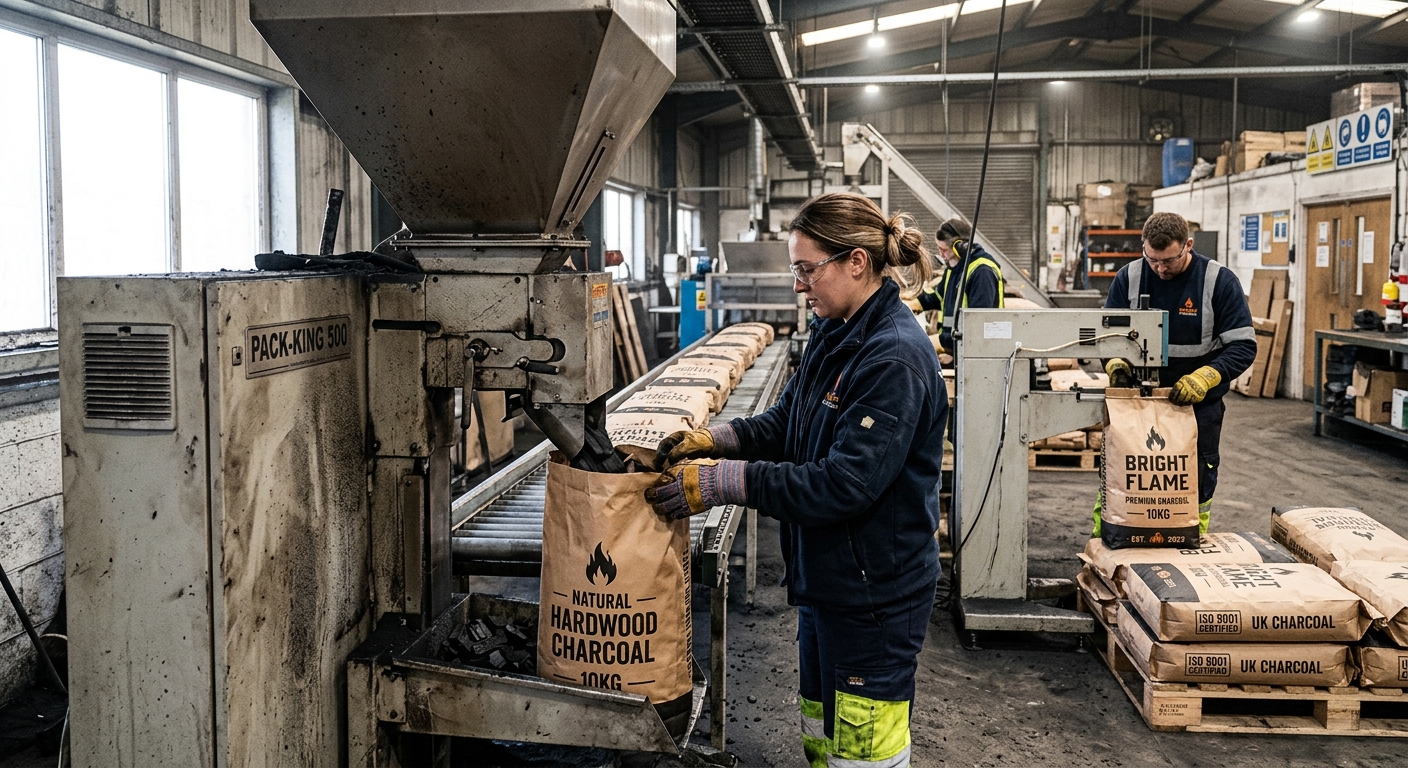
The transition from raw charcoal to a shelf-ready product involves a systematic packing process. Modern facilities utilize semi-automated or fully automated lines to maintain consistency, reduce labor costs, and minimize dust generation.
Screening and Grading
Before packing begins, the charcoal must be screened to remove dust and undersized pieces. Grading ensures that only uniform, high-quality pieces make it into the final package. This step is crucial for maintaining brand reputation and ensuring the product performs as advertised.
Weighing and Filling
Accurate weighing is essential for regulatory compliance and cost control. Automated dosing machines use load cells to measure exact quantities of charcoal before discharging them into the waiting bags or boxes. In advanced setups, vibrating feeders gently move the charcoal to prevent breakage during the filling process.
Sealing and Stitching
Once filled, the packages must be securely closed. Paper bags are typically stitched closed using industrial sewing machines, often with a crepe paper tape over the seam to prevent dust leakage. PP woven bags are also stitched, while cardboard boxes are sealed using heavy-duty adhesive tape or hot melt glue.
Challenges in Charcoal Packing
Despite technological advancements, charcoal packing remains a challenging endeavor. The most prominent issue is dust management. Charcoal dust is highly combustible and poses a significant respiratory hazard to workers. Facilities must install robust industrial ventilation and dust collection systems to maintain a safe working environment and prevent the risk of explosions.
Another challenge is the physical degradation of the product during packing. Equipment must be designed to handle the charcoal gently, minimizing drops and friction that can cause the briquettes or lumps to shatter.
Conclusion
Charcoal packing is an essential component of the solid fuel industry, bridging the gap between production and the end consumer. By selecting the appropriate materials—whether Kraft paper for retail or woven PP for bulk—and implementing efficient, safe packing processes, manufacturers can protect their product's integrity. As the market continues to evolve, investing in modern packing technology and adhering to stringent quality controls will remain paramount for success in the competitive global charcoal market.
Frequently Asked Questions
What is the best material for retail charcoal packaging?
Multi-wall Kraft paper bags are generally considered the best material for retail charcoal packaging. They offer a good balance of cost-effectiveness, printability for branding, and sufficient durability, especially when equipped with a moisture-resistant inner liner.
How do packing facilities manage charcoal dust?
Packing facilities manage charcoal dust by utilizing enclosed packing lines, installing high-capacity industrial dust collectors, and providing workers with appropriate personal protective equipment (PPE). Regular cleaning protocols are also strictly enforced to prevent dust accumulation.
Can charcoal be packed while it is still warm?
No, charcoal must be completely cooled before packing. Packing warm charcoal poses a severe fire risk, as the material can spontaneously combust if it retains residual heat when sealed in an enclosed, oxygen-limited environment.