Coconut Shisha Charcoal Manufacture in Holland: A Comprehensive Guide
Introduction to Coconut Shisha Charcoal Manufacture in Holland
The global demand for high-quality shisha charcoal has seen a significant shift toward sustainable and efficient alternatives. Among these, coconut shell charcoal has emerged as the premium choice for hookah enthusiasts. While the raw materials predominantly originate from tropical regions, the manufacturing and processing of coconut shisha charcoal have found a strategic foothold in Holland. This article explores the dynamic landscape of coconut shisha charcoal manufacture in Holland, delving into the processes, quality standards, and market implications.
Why Coconut Shell Charcoal?
Coconut shell charcoal is highly prized in the shisha community for several compelling reasons. Unlike traditional wood charcoal or quick-light coals, coconut charcoal offers a cleaner, longer-lasting burn. It is odorless, tasteless, and produces minimal ash, ensuring that the flavor of the shisha tobacco remains unadulterated.
Furthermore, the high energy density of coconut shells makes them incredibly efficient. For those interested in the raw material's origin and potential, reading about High Calorie Coconut Charcoal from Indonesia: The Ultimate Guide provides valuable insights into why this material is globally sought after.
The Manufacturing Process in Holland
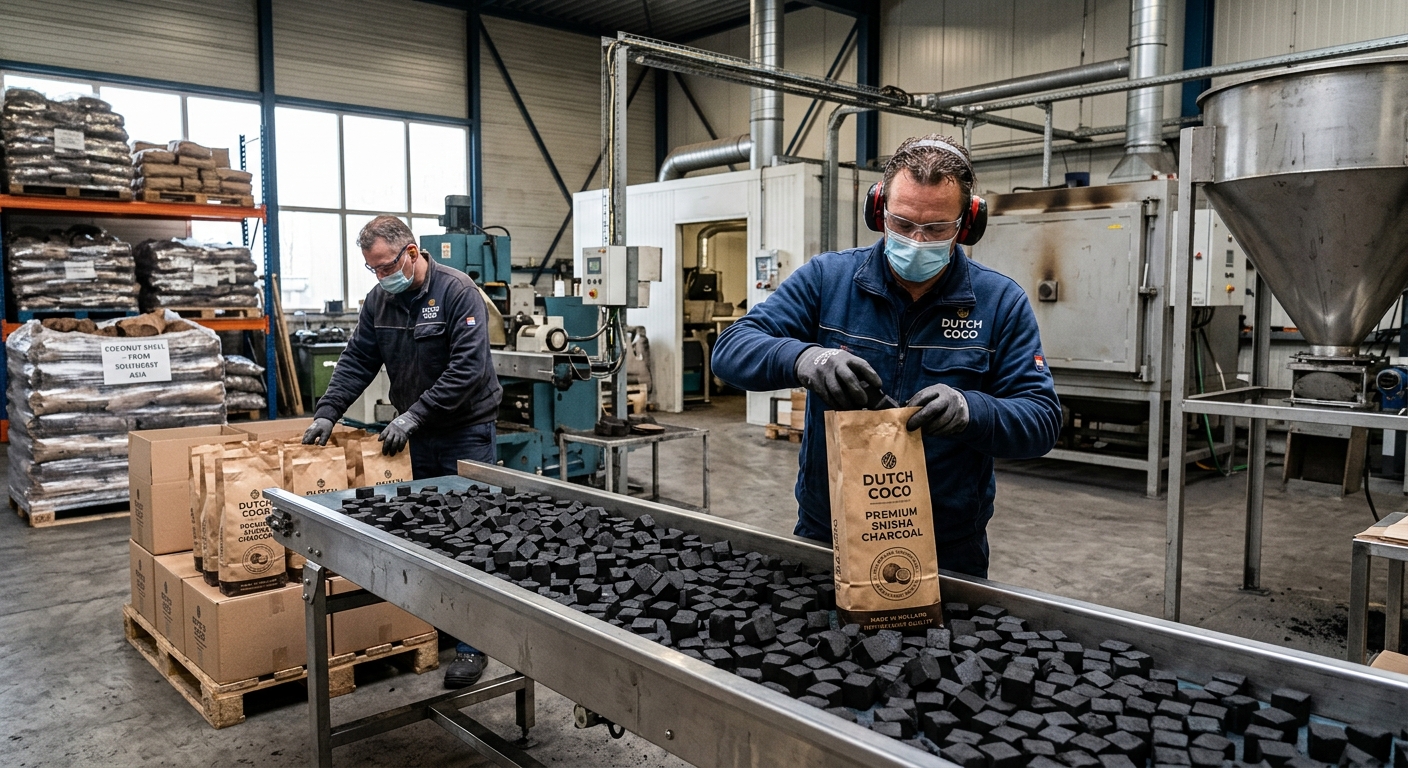
Holland, known for its advanced logistics, technological innovation, and strict quality control, serves as a hub for refining and manufacturing premium coconut shisha charcoal. While the initial carbonization of coconut shells often occurs in source countries like Indonesia or the Philippines to reduce shipping weight, the final stages of production—grinding, mixing, briquetting, and packaging—are meticulously executed in Dutch facilities.
1. Sourcing and Importation
Dutch manufacturers source high-quality carbonized coconut shells from trusted suppliers in tropical regions. The Port of Rotterdam plays a crucial role in facilitating the efficient importation of these raw materials, ensuring a steady supply chain.
2. Grinding and Sieving
Once the carbonized shells arrive at the manufacturing facility, they undergo a rigorous grinding process. The charcoal is pulverized into a fine powder. Sieving ensures that only particles of the correct size proceed to the next stage, which is vital for the structural integrity of the final briquette.
3. Mixing with Binders
Because coconut shell powder cannot bind itself into a solid shape, a natural binder, typically tapioca starch, is added. Water is introduced to create a cohesive paste. The precise ratio of charcoal powder, binder, and moisture is a closely guarded secret among top manufacturers, as it dictates the ash content and burning duration.
4. Briquetting and Extrusion
The mixture is then fed into high-pressure extrusion or pressing machines. For shisha charcoal, the most common shapes are cubes or flats. The extreme pressure compacts the mixture, giving the charcoal its dense, hard characteristic that prevents it from breaking easily during transport or use.
5. Drying
The newly formed briquettes contain significant moisture and must be thoroughly dried. Dutch manufacturers utilize advanced, climate-controlled drying ovens that ensure even moisture removal without cracking the briquettes. This precise drying process is crucial for preventing the charcoal from emitting unwanted smoke or odors when lit.
Quality Control Standards in Holland
Operating in the European market means adhering to stringent environmental and quality standards. Dutch manufacturers employ comprehensive quality control measures at every step.
- Ash Content: Premium shisha charcoal must have an ash content of less than 3%. This is continuously monitored.
- Drop Test: Briquettes are subjected to drop tests to ensure they will not shatter upon impact.
- Burn Time: Samples are regularly tested to guarantee a minimum burn time, usually exceeding 90 minutes.
- Chemical Analysis: Ensuring zero chemical additives, sulfur, or heavy metals are present, making it safe for indoor use.
Sustainability and Environmental Impact
Sustainability is a core tenet of the coconut charcoal industry in Holland. Utilizing coconut shells—a byproduct of the copra and coconut oil industries—prevents agricultural waste and eliminates the need to cut down trees for wood charcoal production. This aligns with Europe's growing emphasis on circular economies and sustainable products.
Moreover, the same sustainable principles apply to other uses of coconut charcoal. For instance, The Ultimate Guide to Coconut Shell Briquettes for BBQ: Superior Grilling and Sustainability highlights how these eco-friendly briquettes are also revolutionizing the culinary grilling experience.
Market Distribution and Export
Holland's strategic geographic location makes it an ideal distribution center. From Dutch manufacturing plants, premium coconut shisha charcoal is exported throughout Europe, the Middle East, and North America. The "Made in Holland" label (or processed in Holland) carries a reputation for reliability, safety, and superior quality, allowing manufacturers to command premium prices in international markets.
Comparing Shisha Charcoal Types
| Feature | Coconut Charcoal | Wood Charcoal | Quick-Light Charcoal |
|---|---|---|---|
| Burn Time | Very Long (90+ mins) | Medium (45-60 mins) | Short (30-40 mins) |
| Odor/Taste | Odorless/Tasteless | Slight Wood Flavor | Chemical/Sulfur Taste |
| Ash Production | Very Low (<3%) | High | High |
| Eco-Friendly | Yes (Recycled shells) | No (Requires deforestation) | No (Chemical additives) |
The Future of the Industry
The future of coconut shisha charcoal manufacture in Holland looks promising. As consumers become more educated about the health and environmental impacts of their choices, the demand for natural, high-quality charcoal will continue to rise. Innovations in automation and sustainable energy use within Dutch factories will likely further reduce the carbon footprint of production, solidifying Holland's position as a leader in the premium charcoal market.
Conclusion
The manufacture of coconut shisha charcoal in Holland represents a perfect synergy between high-quality tropical raw materials and European industrial precision. By focusing on sustainability, rigorous quality control, and advanced manufacturing techniques, Dutch producers deliver a product that elevates the shisha experience. As global demand for clean-burning, eco-friendly charcoal grows, Holland's role in this niche yet lucrative industry will undoubtedly continue to expand.
Frequently Asked Questions
Why is coconut charcoal preferred for shisha?
Coconut charcoal is preferred because it burns hotter, longer, and cleaner than wood or quick-light coals. It produces very little ash and has no taste or odor, which preserves the authentic flavor of the shisha tobacco.
Are there coconut trees in Holland for manufacturing?
No, coconut trees do not grow in Holland. Dutch manufacturers import carbonized coconut shells or semi-processed charcoal from tropical countries like Indonesia and then perform the final manufacturing stages (grinding, mixing, briquetting, and drying) in Holland to ensure high European quality standards.
Is coconut shisha charcoal environmentally friendly?
Yes, it is highly eco-friendly. It is made from coconut shells, which are agricultural waste products. Using these shells prevents them from being discarded and saves trees from being cut down to make traditional wood charcoal.
How do you light coconut shisha charcoal?
Because coconut charcoal contains no chemical accelerants, it cannot be lit with a simple lighter. It requires a continuous heat source, such as an electric coil burner or a gas stove, for about 5 to 10 minutes until it is fully glowing red.