The Ultimate Guide to Coconut Cube Charcoal: Benefits, Uses, and Best Practices
Introduction to Coconut Cube Charcoal
In recent years, the demand for sustainable, high-quality charcoal has surged, leading to the rise of coconut cube charcoal. Unlike traditional wood-based charcoal, coconut cube charcoal is crafted from the shells of coconuts, making it an eco-friendly and highly efficient alternative. This article delves into the unique properties, benefits, and applications of coconut cube charcoal, exploring why it has become a staple for both culinary and recreational uses.
Whether you are a grilling enthusiast or a shisha aficionado, understanding the composition and advantages of coconut cube charcoal can elevate your experience. By choosing a product derived from renewable resources, consumers can enjoy longer burn times and cleaner emissions while minimizing their environmental footprint.
The Manufacturing Process
The journey of coconut cube charcoal begins with the collection of mature coconut shells. These shells are a byproduct of the coconut oil and water industries, meaning no trees are cut down for their production. Once collected, the shells undergo a process known as carbonization, where they are burned in a low-oxygen environment. This step converts the raw organic material into raw charcoal.
After carbonization, the charcoal is crushed into a fine powder and mixed with a natural binder, typically tapioca starch, to help it hold its shape. The mixture is then compressed into uniform cubes and dried in large ovens to remove any remaining moisture. This precise manufacturing process ensures that the final product is dense, consistent, and free from chemical additives.
Benefits of Using Coconut Cube Charcoal
Eco-Friendly and Sustainable
One of the most significant advantages of coconut cube charcoal is its sustainability. Because it utilizes waste material from the coconut industry, it helps reduce landfill waste and prevents deforestation. For consumers looking to make environmentally responsible choices, coconut charcoal offers a guilt-free solution without compromising on quality.
Longer Burn Time and High Heat
Due to its high density, coconut cube charcoal burns hotter and longer than traditional lump charcoal or briquettes. A single cube can burn for up to two hours, providing consistent heat that is ideal for both slow cooking and smoking shisha. This efficiency means you use less charcoal over time, making it a cost-effective option.
Clean and Odorless Burn
Coconut cube charcoal produces significantly less ash, smoke, and sparks compared to other types of charcoal. When used for shisha, it preserves the true flavor of the tobacco without imparting any unwanted chemical tastes or odors. For a deeper understanding of charcoal types and their impact on your shisha experience, you can read A Comprehensive Guide to Shisha Coal: Types, Benefits, and Best Practices.
Applications of Coconut Cube Charcoal
Shisha and Hookah
The primary use for coconut cube charcoal is in the preparation of shisha. Its clean burn, lack of odor, and long-lasting heat make it the gold standard for hookah lounges and home users alike. The uniform cube shape ensures even heat distribution, preventing the shisha tobacco from burning too quickly and ruining the session. For Arabic readers interested in the history and components of hookah, check out الدليل الشامل عن الشيشة: التاريخ، المكونات، والأضرار.
Grilling and Barbecuing
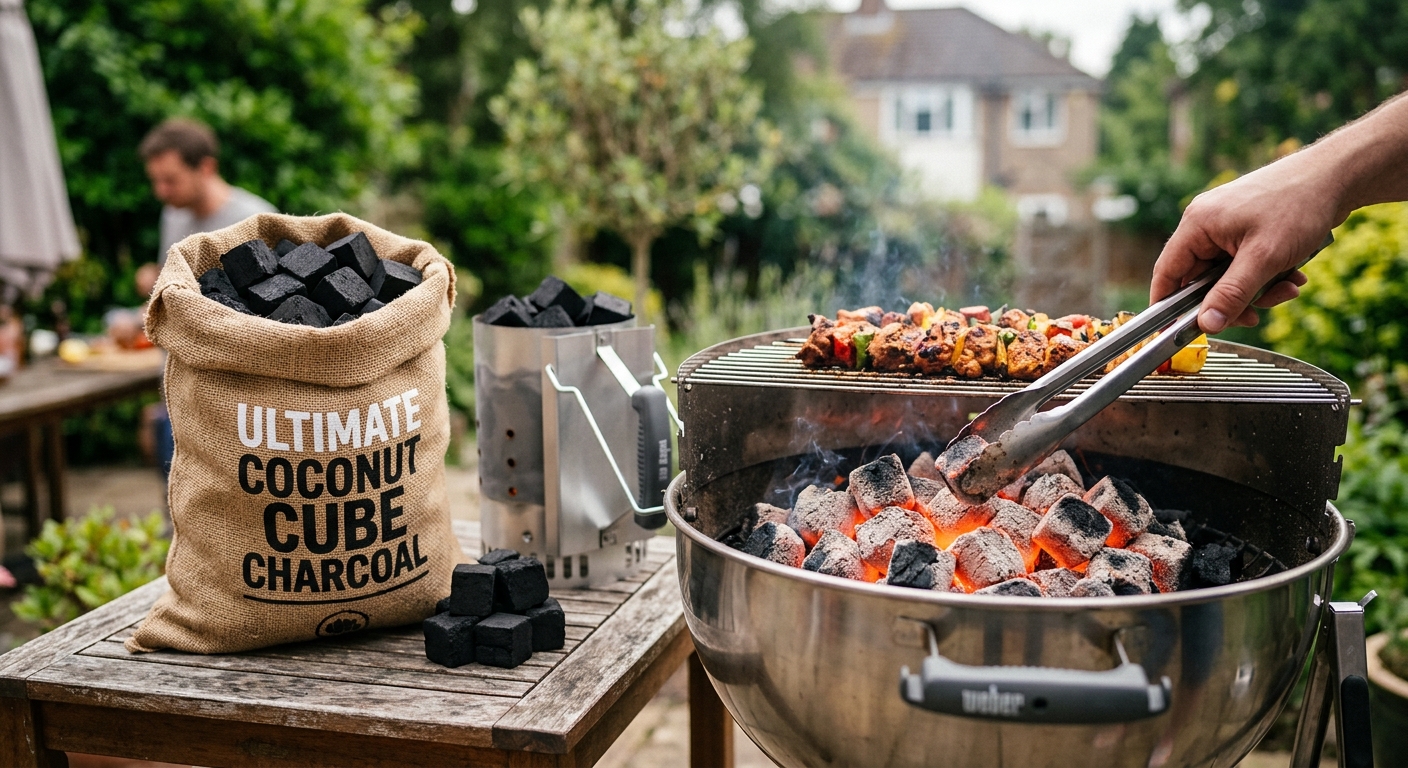
While highly popular in the shisha community, coconut cube charcoal is also making waves in the culinary world. Its high, steady heat is perfect for searing meats, while its long burn time is excellent for slow-roasting. Furthermore, the minimal ash production makes post-barbecue cleanup a breeze.
Comparison: Coconut Cube Charcoal vs. Traditional Wood Charcoal
To better understand the advantages of coconut cube charcoal, let us compare it directly with traditional wood lump charcoal across several key performance metrics.
| Charcoal Type | Burn Time (approx.) | Ash Production | Sustainability |
|---|---|---|---|
| Coconut Cube Charcoal | 90 - 120 minutes | Low (under 3%) | High (Byproduct usage) |
| Traditional Wood Charcoal | 45 - 60 minutes | High (10% - 15%) | Low (Requires deforestation) |
Best Practices for Lighting and Using Coconut Cubes
Because coconut cube charcoal contains no quick-light chemicals, it requires a dedicated heat source to ignite properly. A single coil electric burner is the most common and effective tool for lighting these cubes. Place the cubes directly on the coils and heat them for about 5 to 7 minutes per side, or until they are completely glowing red and covered in a thin layer of gray ash.
Never use lighter fluid or other chemical accelerants, as these will ruin the taste of your food or shisha and defeat the purpose of using a natural product. Always handle lit charcoal with metal tongs and ensure you are using it in a well-ventilated area to prevent carbon monoxide buildup.
Conclusion
Coconut cube charcoal represents the perfect intersection of performance, sustainability, and quality. Whether you are seeking a superior heat source for your backyard barbecue or the cleanest possible burn for your shisha session, coconut cubes deliver unmatched results. By switching to this eco-friendly alternative, you not only elevate your own experience but also contribute to a more sustainable and less polluted world. As the market for premium charcoal continues to grow, coconut cube charcoal stands out as the clear choice for discerning consumers.
Frequently Asked Questions (FAQ)
Why does coconut cube charcoal take longer to light?
Coconut cube charcoal is very dense and completely free of chemical accelerants (like sulfur or saltpeter) that are found in quick-light coals. This natural composition means it requires a sustained, high-heat source to ignite, but rewards you with a longer, cleaner burn.
Can I use coconut cube charcoal indoors?
While coconut charcoal produces less smoke and carbon monoxide than wood charcoal, burning any organic material indoors carries risks. If you use it indoors for shisha, ensure the room is highly ventilated and never leave burning charcoal unattended.
How should I store my coconut cube charcoal?
Store your coconut charcoal in a cool, dry place. Exposure to moisture or high humidity can make the cubes difficult to light and can negatively impact their burn time and heat output. Keeping them in an airtight container is recommended.