Coconut Charcoal Briquettes Factory: Manufacturing and Benefits
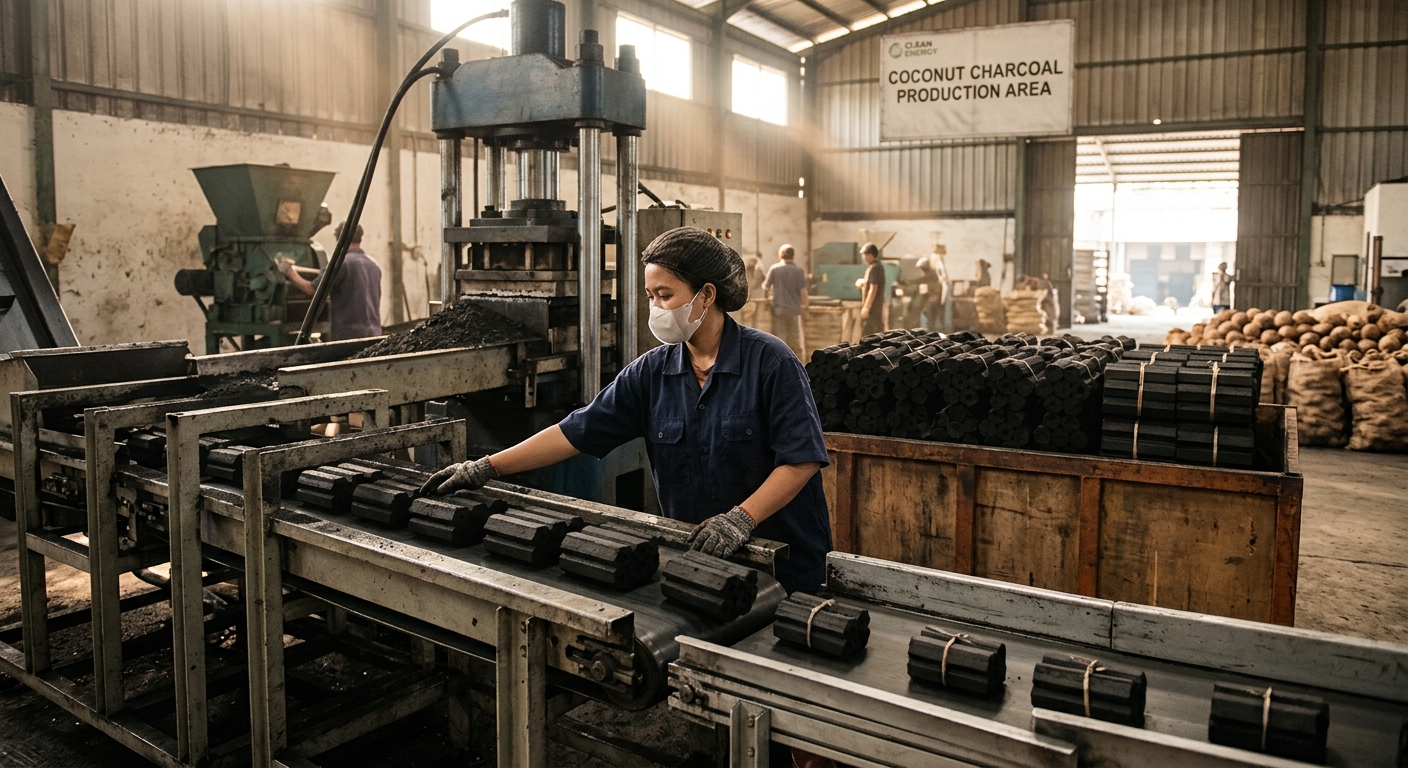
Introduction to Coconut Charcoal Briquettes
The global demand for sustainable and high-quality fuel alternatives has led to the rapid rise of the coconut charcoal briquettes factory. These facilities specialize in transforming coconut shells, an agricultural byproduct, into premium charcoal briquettes used widely for shisha, barbecues, and industrial applications. This eco-friendly fuel source is prized for its high heat output, minimal ash production, and long burning time. Understanding the operations of a coconut charcoal briquettes factory offers valuable insights into sustainable manufacturing practices and the global supply chain.
The Manufacturing Process
1. Sourcing and Carbonization
The process begins with sourcing high-quality coconut shells. Once collected, the shells undergo carbonization, a process where they are burned in a low-oxygen environment. This step is crucial as it removes moisture and volatile compounds, leaving behind pure carbon. The efficiency of the carbonization process directly impacts the quality of the final briquettes.
2. Crushing, Mixing, and Briquetting
After carbonization, the coconut charcoal is crushed into a fine powder. This powder is then mixed with a natural binder, typically tapioca starch, and water to create a cohesive paste. The mixture is fed into a briquetting machine, which extrudes or presses the paste into specific shapes and sizes, such as cubes, cylinders, or hexagonal logs. For a deeper understanding of the entire process and its advantages, you can read The Ultimate Guide to Coco Coal: Benefits, Manufacturing, and Uses.
3. Drying and Packaging
The newly formed briquettes contain moisture from the binder and must be thoroughly dried. Factories use large industrial ovens or natural sun drying, depending on the climate and production scale. Once the moisture content is reduced to the optimal level (usually under 5%), the briquettes are cooled and packaged for distribution. Premium packaging is often used to prevent moisture absorption during transit.
Environmental and Economic Benefits
Operating a coconut charcoal briquettes factory contributes significantly to environmental sustainability. By utilizing coconut shells that would otherwise be discarded or burned inefficiently, these factories reduce agricultural waste and prevent deforestation, as no trees are cut down to produce this charcoal. Furthermore, the industry creates employment opportunities in coconut-producing regions, boosting local economies.
The following table compares standard wood charcoal with coconut shell charcoal briquettes based on key performance metrics.
| Fuel Type | Burn Time (Hours) | Ash Content (%) | Heat Output (kcal/kg) |
|---|---|---|---|
| Wood Charcoal | 1 - 2 | 5 - 8 | 6000 |
| Coconut Charcoal Briquettes | 2 - 3 | 2 - 4 | 7200 |
Global Market and Sourcing
The international market for coconut charcoal briquettes is expanding, with high demand in regions like the Middle East, Europe, and North America. Importers look for factories that can provide consistent quality, reliable supply chains, and adherence to international standards. For businesses in Europe looking to import these products, resources like Indonesian Hookah Charcoal Importer Germany: The Ultimate Guide to Sourcing Quality Briquettes offer essential guidance on navigating the importation process.
Conclusion
A coconut charcoal briquettes factory represents a perfect synergy between agricultural waste management and the production of a premium, sustainable fuel source. As consumers and industries continue to prioritize eco-friendly alternatives, the role of these factories will only grow in importance. By maintaining high manufacturing standards, these facilities ensure that the global market receives a superior product that outperforms traditional charcoal while protecting the environment.
Frequently Asked Questions (FAQ)
What are coconut charcoal briquettes used for?
They are primarily used for hookah (shisha) smoking, barbecuing, and grilling, due to their long burn time, high heat, and lack of smoke or odor.
Why is tapioca starch used as a binder?
Tapioca starch is a natural, non-toxic, and food-grade binder that holds the charcoal powder together without affecting the smell or taste of the smoke, which is especially important for shisha use.
How do coconut briquettes benefit the environment?
They are made from recycled coconut shells, meaning no trees are felled for their production. This helps combat deforestation and provides a sustainable use for agricultural waste.