The Ultimate Guide to Coconut Charcoal Briquettes: Uses, Benefits, and Manufacturing
Introduction to Coconut Charcoal Briquettes
In recent years, the demand for sustainable, high-quality fuel alternatives has skyrocketed. Among the most popular and efficient options available today is the coconut charcoal briquette. Made from recycled coconut shells, these briquettes offer a cleaner, hotter, and longer-lasting burn compared to traditional wood charcoal. Whether you are an avid griller, a shisha enthusiast, or a business looking for premium fuel sources, understanding the benefits and production of coconut charcoal briquettes is essential.
The Manufacturing Process
The journey from a discarded coconut shell to a premium briquette is a fascinating process that emphasizes sustainability and efficiency. The process begins with the collection of mature coconut shells, which are a byproduct of the copra and coconut oil industries. Instead of being left to rot or burn as waste, these shells are repurposed.
Carbonization
The first major step is carbonization. The shells are heated in an oxygen-limited environment, typically in specialized kilns. This process burns off volatile compounds and moisture, leaving behind pure carbon. The result is raw coconut shell charcoal.
Crushing and Mixing
Once carbonized, the charcoal is crushed into a fine powder. This powder is then mixed with a natural binder, usually a starch based on tapioca or cassava. The binder is crucial as it holds the charcoal dust together without introducing harmful chemicals or unwanted odors into the final product.
Molding and Drying
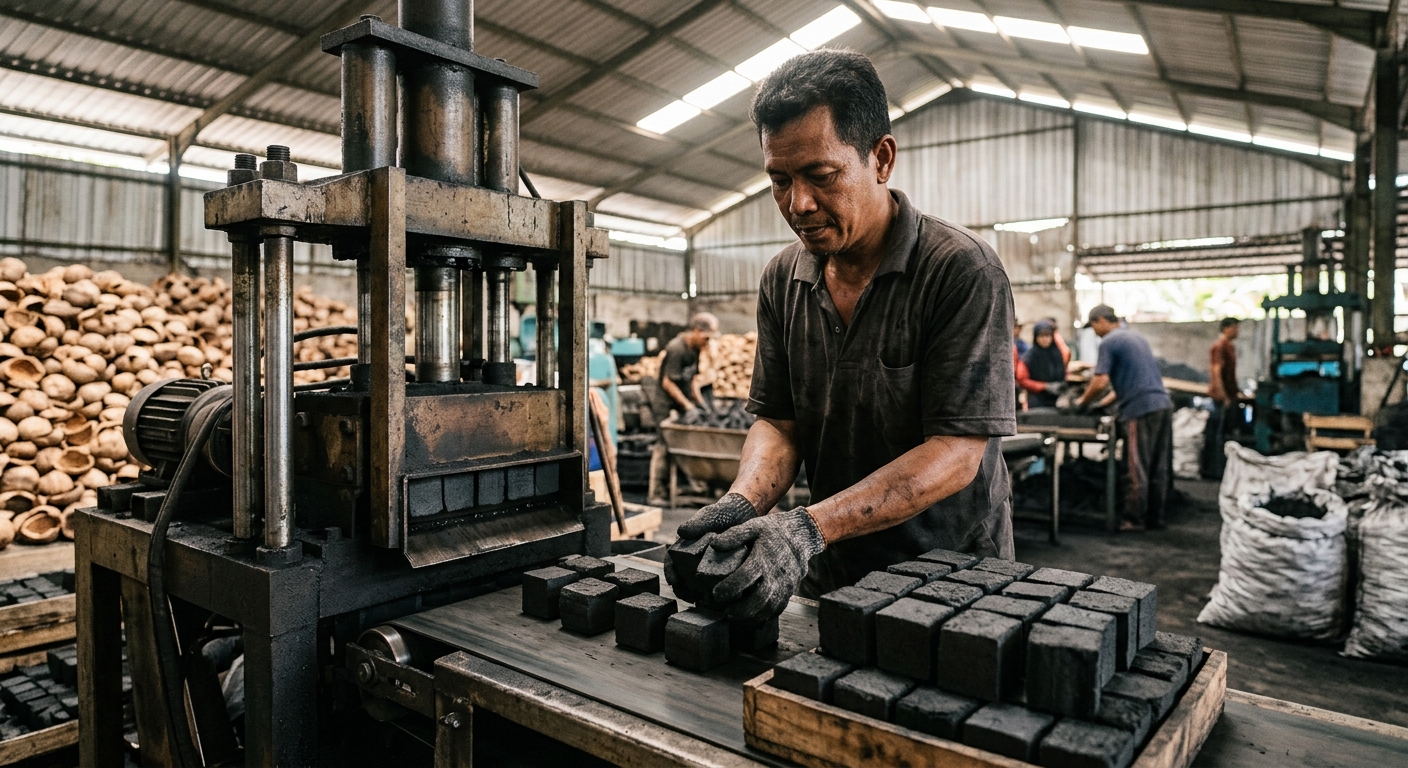
The mixture is then pressed into various shapes using high-pressure molding machines. Common shapes include cubes, hexagons, and cylinders, depending on their intended use—cubes are popular for shisha, while larger shapes are favored for grilling. Finally, the briquettes are dried in large industrial ovens to reduce their moisture content to optimal levels, ensuring a quick ignition and a stable burn. To learn more about how these are produced on a large scale, read about a Coconut Charcoal Briquettes Factory: Manufacturing and Benefits.
Why Choose Coconut Charcoal Briquettes?
Coconut charcoal briquettes offer numerous advantages over traditional lump charcoal and standard briquettes. These benefits make them the preferred choice for both domestic and commercial applications.
Longer Burning Time
Due to their high density, coconut charcoal briquettes burn significantly longer than traditional wood charcoal. They can maintain a consistent high temperature for hours, reducing the need to constantly add more fuel during long grilling sessions or shisha smoking.
Low Ash Production
One of the most appreciated characteristics of coconut briquettes is their minimal ash output. They typically produce less than 3% ash, which means less mess to clean up and a lower risk of ash blowing onto your food or into your surroundings.
Eco-Friendly and Sustainable
Coconut briquettes are 100% natural and sustainable. They are made from waste materials, meaning no trees are cut down to produce them. This helps combat deforestation and provides a valuable income stream for coconut farmers.
Odorless and Smokeless
Because they contain no chemical additives or fillers, premium coconut charcoal briquettes burn clean. They are virtually smokeless and odorless, ensuring that the natural flavors of your grilled food or shisha tobacco are not tainted by unpleasant chemical fumes.
Comparing Charcoal Types
To better understand why coconut charcoal stands out, let's compare it with traditional hardwood lump charcoal and standard wood briquettes.
| Charcoal Type | Burn Time | Ash Content | Eco-Friendliness |
|---|---|---|---|
| Coconut Briquettes | 2 to 3 hours | Under 3% | High (Made from waste) |
| Hardwood Lump | 1 to 1.5 hours | 5% to 8% | Low (Requires cutting trees) |
| Standard Briquettes | 1.5 to 2 hours | 10% to 15% | Medium (Contains fillers) |
Finding the Right Supplier
If you are looking to purchase coconut charcoal briquettes in bulk, selecting the right manufacturer is critical. You want a supplier that maintains strict quality control, uses natural binders, and follows ethical labor practices. Sourcing directly from reputable factories ensures you get a consistent product that meets your specifications. For a detailed walkthrough on what to look for, check out this Comprehensive Guide to Choosing a Charcoal Briquettes Manufacturer.
Conclusion
Coconut charcoal briquettes are undeniably superior in the world of solid fuels. Their extended burn time, high heat output, low ash production, and environmental sustainability make them a fantastic choice for anyone serious about grilling or shisha. By choosing coconut charcoal, you are not only improving your own experience but also supporting sustainable agricultural practices and reducing global deforestation.
Frequently Asked Questions
Are coconut charcoal briquettes safe to cook with?
Yes, absolutely. Because they are made from 100% natural coconut shells and natural food-grade binders, they do not release toxic chemicals, making them incredibly safe for cooking.
How do I light coconut charcoal briquettes?
Because of their high density, they can take a bit longer to light than traditional charcoal. It is best to use a charcoal chimney starter or a dedicated electric coil burner (for shisha cubes) until they are fully glowing red.
Can I use them for smoking meats?
Yes, they are excellent for smoking meats. Their ability to hold a consistent, low temperature for a long period makes them ideal for the low-and-slow cooking method required for BBQ smoking.
How should I store coconut charcoal briquettes?
They should be stored in a cool, dry place. Keep them away from moisture and humidity, as absorbing water will make them difficult to light and decrease their burning efficiency. Storing them in an airtight container or a heavy-duty plastic bag is recommended.