B2B Shisha Charcoal Manufacture in Indonesia: The Ultimate Guide
Introduction to B2B Shisha Charcoal Manufacturing in Indonesia
Indonesia has emerged as the global powerhouse for coconut shell charcoal briquettes, particularly for shisha (hookah) use. The country's vast archipelago provides an abundant supply of premium coconuts, which are essential for producing high-quality, long-lasting, and low-ash charcoal. For B2B buyers looking to source top-tier shisha charcoal, understanding the manufacturing landscape in Indonesia is crucial. This article delves into the intricate processes, quality standards, and sourcing strategies that define the Indonesian shisha charcoal industry.
The Importance of Coconut Shell Raw Material
The foundation of premium shisha charcoal lies in its raw material. Unlike hardwood or chemical-laden quick-light coals, coconut shell charcoal is 100% natural. It burns hotter, lasts longer, and produces significantly less ash. In Indonesia, regions such as Sulawesi, Sumatra, and Java are renowned for yielding coconuts with thick, dense shells that are ideal for carbonization. Selecting the right raw material is the first critical step for any reputable B2B shisha charcoal manufacturer.
When sourcing these products, buyers often consult resources like A Comprehensive Guide to Coal Cubes: Sourcing, Quality, and Applications to ensure they are making informed purchasing decisions.
The Manufacturing Process
Carbonization and Crushing
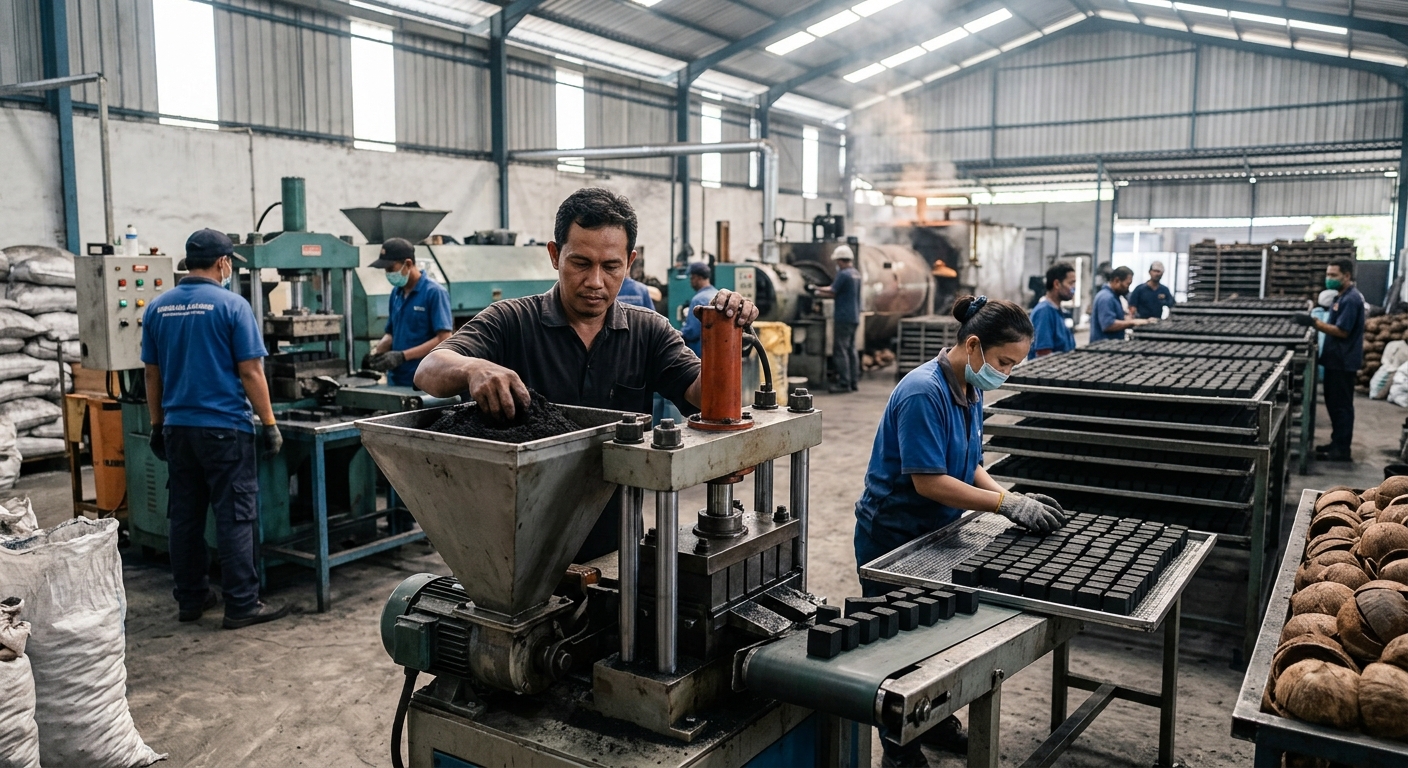
The manufacturing process begins with the carbonization of coconut shells. The shells are burned in controlled environments with limited oxygen to remove moisture and volatile compounds, leaving behind high-carbon char. This char is then crushed into a fine powder. The finer the powder, the smoother and denser the final briquette will be.
Mixing and Extrusion
The fine charcoal powder is mixed with a natural binder, typically tapioca starch, and water. This mixture is then fed into an extrusion machine, which presses the material into long, dense logs. These logs are cut into the desired shapes, most commonly cubes (e.g., 22mm, 25mm, or 26mm), flats, or hexagons.
Drying and Packaging
Once cut, the briquettes contain a high moisture content and must be dried. They are placed in industrial ovens for 24 to 48 hours to reduce moisture to below 5%. Proper drying is essential to prevent cracking and ensure quick ignition. Finally, the dried charcoal is cooled and packaged according to B2B client specifications, often in inner plastic bags and outer master cartons.
Quality Control and Specifications
Quality control is paramount in the B2B shisha charcoal market. International buyers demand consistency in burn time, ash content, and drop test durability. Indonesian manufacturers implement strict QA protocols at every stage, from raw material inspection to pre-shipment container loading.
For an in-depth look at factory operations and best practices, one might refer to the دليل شامل عن مصنع فحم: العمليات، التكنولوجيا، وأفضل الممارسات, which outlines the technological advancements driving the industry forward.
Below is a comparison of typical shisha charcoal grades produced in Indonesia:
| Charcoal Grade | Ash Content | Burn Time | Drop Test (1m onto concrete) |
|---|---|---|---|
| Premium Quality | Less than 2.5% | 90 - 120 minutes | 0 - 1 break max (out of 10) |
| Standard Quality | 2.5% - 4.0% | 70 - 90 minutes | 2 - 3 breaks max (out of 10) |
| Economy Quality | 4.0% - 6.0% | 50 - 70 minutes | 4 - 5 breaks max (out of 10) |
Sourcing Strategies for B2B Buyers
Finding a reliable supplier in Indonesia requires due diligence. B2B buyers should look for manufacturers with transparent supply chains, consistent communication, and the ability to provide independent laboratory test reports (such as SGS or Intertek). Visiting the factory, requesting samples, and verifying export documentation are essential steps in establishing a long-term, mutually beneficial partnership.
Conclusion
Indonesia remains the unrivaled leader in the B2B shisha charcoal manufacturing sector. By leveraging high-quality coconut shells, advanced manufacturing techniques, and stringent quality control, Indonesian suppliers continue to meet the growing global demand for premium hookah coals. For B2B buyers, understanding the intricacies of production and grading is the key to securing the best products for their respective markets.
Frequently Asked Questions (FAQ)
Why is Indonesian coconut shell charcoal considered the best for shisha?
Indonesian coconut shell charcoal is prized for its high density, which translates to a longer burn time, higher heat output, and significantly less ash compared to other materials. Furthermore, it is 100% natural and does not emit unpleasant odors or flavors that could ruin the shisha experience.
What is the typical minimum order quantity (MOQ) for B2B purchases?
Most reputable Indonesian manufacturers require an MOQ of one 20-foot container, which holds approximately 18 to 19 metric tons of shisha charcoal. This ensures production efficiency and optimizes shipping costs for the buyer.
How can I verify the quality of a supplier before placing a large order?
You should request physical samples to test for burn time, ash color, and durability. Additionally, ask the supplier for recent, independent laboratory test reports (like SGS) detailing moisture content, volatile matter, fixed carbon, and ash content. Video calls and factory tours are also highly recommended.